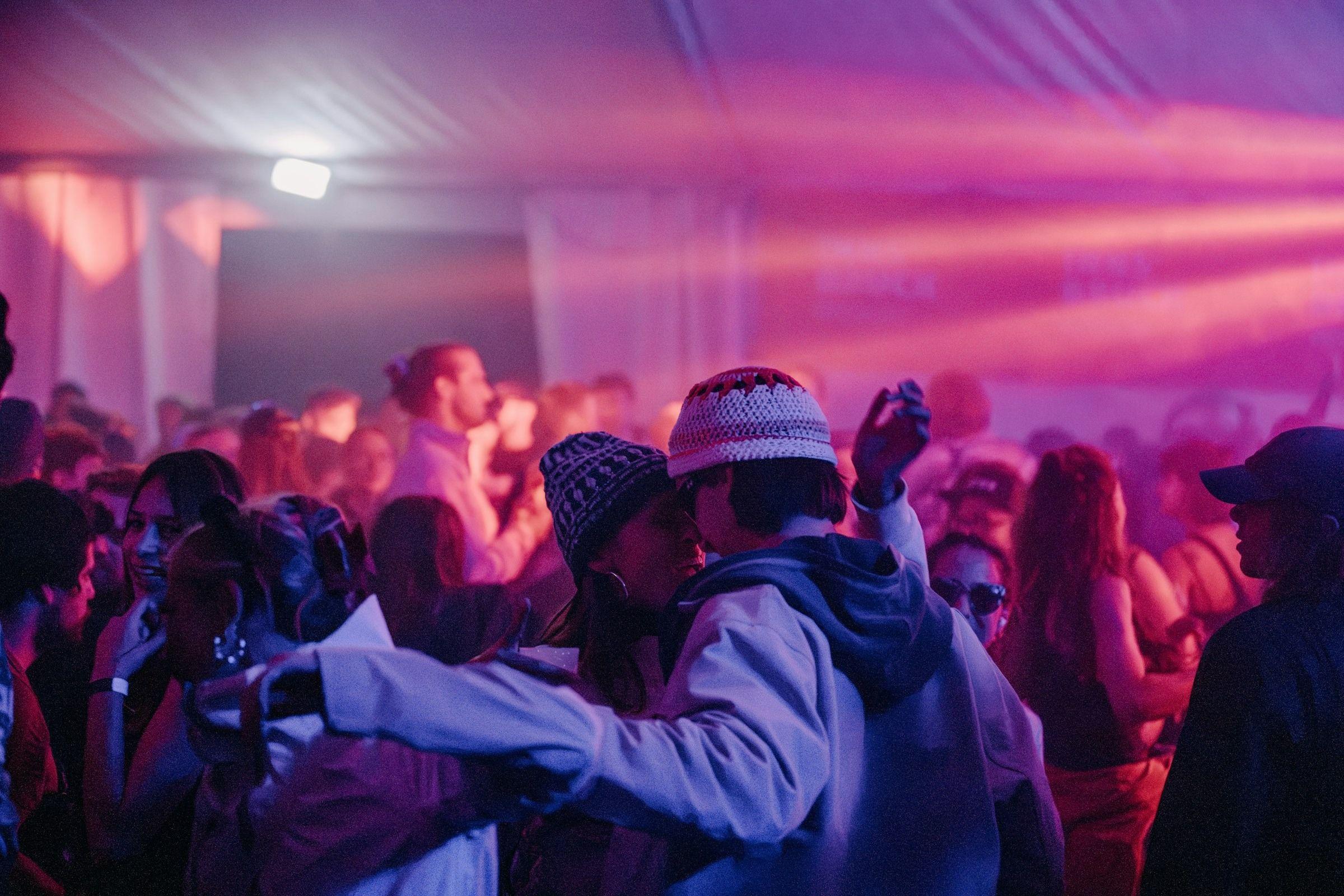
Short answer: when guests stand along the walls, the cause is often the room, the timing or the first hour of music, and much less often the crowd itself. Dim the lights, shrink the space, fix the sound at the floor, and give a few people a reason to go first.
A room can be full and the floor can still be empty. The good news is that an empty floor usually has a cause you can spot. Use this list during the event to find it, and after the event to set up the next one.
10 fixes for an empty dance floor
- Turn the lights down. A bright room can make many guests self-conscious. Dim the house lights over the floor, keep some light on the bar and the exits, and let color or a few moving lights do the work.
- Shrink the room. A small crowd in a big room often looks emptier than it is. Close off a section, move the DJ closer to where people already stand, or rope off the back so guests gather near the booth.
- Clear the floor. Tables, chairs, a bar line or a merch table in the middle of the space can block the floor before anyone dances. Walk the room before doors and keep the space in front of the DJ open.
- Check the sound where guests stand. The booth monitor can sound fine while the floor is too quiet, too loud or muddy. Walk the room during the first set, and ask the DJ or the sound person to set levels for the floor.
- Let the opener warm up the room. Playing peak-time records to a room of ten people can push guests back to the bar. A steady build usually works better. Our opening DJ set tips cover how openers can pace the first hour.
- Play what you promised. If the flyer said Afrobeats and the room hears tech house, some guests will wait it out. Say the music style and who is playing in your event description, and brief your DJs on the crowd you promoted to.
- Get people there at the same time. A floor usually fills faster when guests arrive in a wave. Publish a start time that matches when the music actually picks up, share set times so guests know when to show up, and send a short text blast on the day with the start time. Our guide to getting guests to arrive early has more on the first hour.
- Give a few people a reason to go first. Many rooms need a handful of dancers before others join. Ask your crew, your regulars or the DJ's friends to start near the booth. You can also add dancers or a host to your lineup (add performers to a lineup) so there is energy on the floor early.
- Have the DJ read the room, then adjust. Watch which tracks pull people in and which send them to the bar. A familiar song, a tempo change or a shift in genre can bring a stalled floor back. If your crowd is mixed, an open-format set may keep more groups dancing.
- Fix the heat and the lines. A hot, stuffy room or a long line for the bathroom can pull guests off the floor. Check the temperature once the room fills, and make sure water and the restrooms are easy to find.
After the event
Write down when the floor filled, what was playing and how many people were in the room. Share it with your DJs before the next date so you can move the build, the start time or the room setup. When you are ready, create your next event with the music style, set times and lineup on the page.