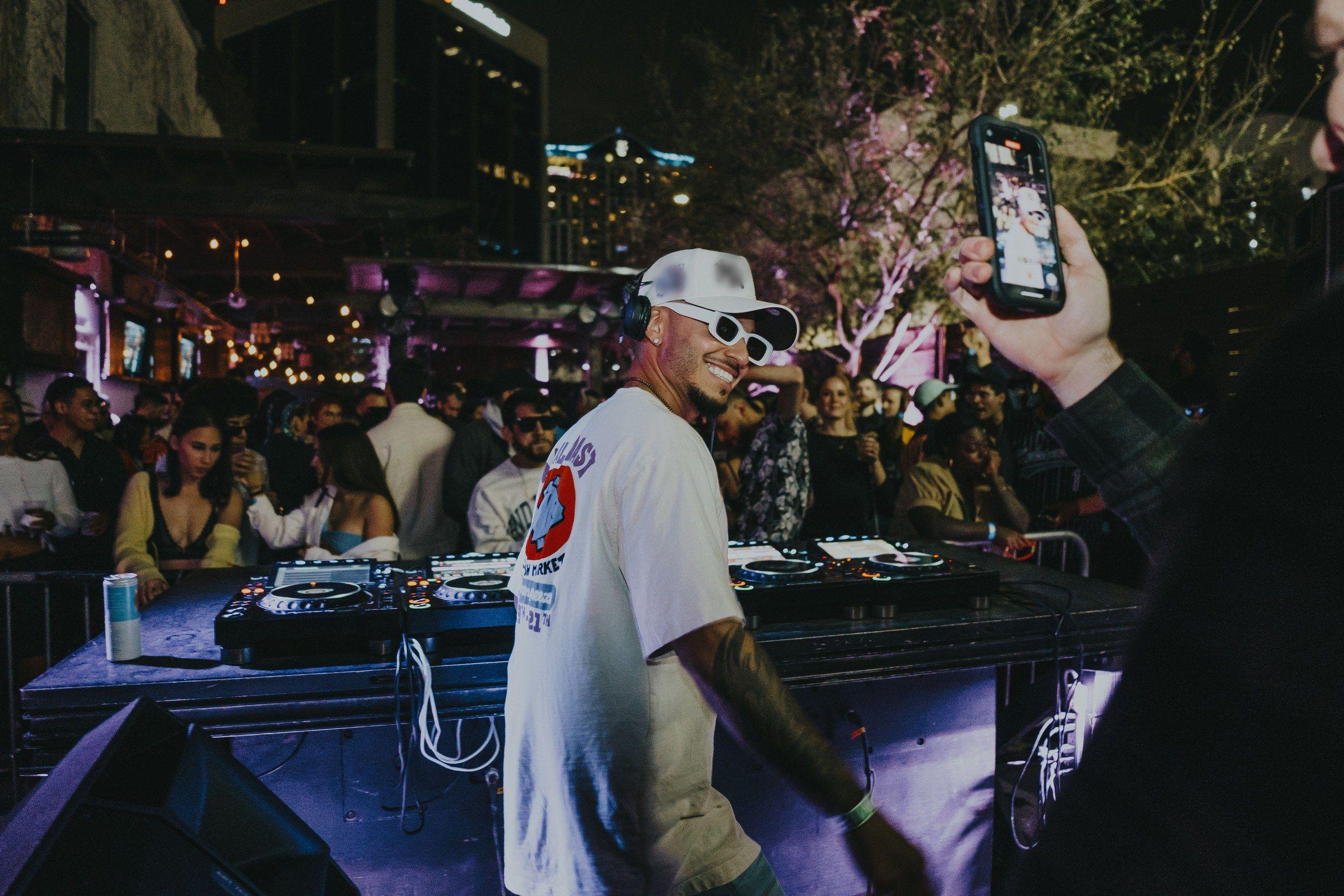
Opening DJ Set Tips: 10 Ways to Warm Up the Room Before the Headliner
Posted 8 hours ago

Posted 8 hours ago

Short answer: an opening set is there to build the room toward the headliner. Start lower in energy than you think you need, play for the people who are actually in front of you, leave the biggest records for later in the lineup, and hand over on time with the floor warm and ready.
Openers often play to a half-empty room while people are still at the bar, checking coats and finding friends. Done well, it's the set the headliner thanks you for. Here are 10 ways to get there.
Before the event, ask for your set time and length, who plays before and after you, what time doors open, and the hard end time for the room. Ask what the headliner usually plays, and whether there's anything the organizer wants you to avoid. Good organizers send this in an artist advance; if they don't, ask for it.
A 10 PM opener with doors at 9:30 is playing to the first arrivals. An opener who goes on at midnight is closer to a support set. The same records won't work for both, so look at the full set times and pick your starting point from there.
Begin at a tempo and energy well below where the headliner will start, and leave yourself room to climb. Early guests are talking, ordering drinks and getting comfortable. Music with a steady groove and some space in it lets them do that, and it pulls them toward the floor when they're ready.
Watch the first 20 or 30 people. Are they standing near the bar, nodding along, or already dancing? Adjust to them. A set you prepared at home is a starting point, and the room tells you how fast to move.
Skip the anthems everyone knows and anything the headliner is known for. If you're not sure, ask the headliner or check a few of their recent sets. Playing their signature track an hour before they go on puts them in a tough spot.
Early in the event, the room is emptier and sound carries more. Start at a comfortable level, follow the venue's limits, and let the volume come up as the room fills. If there's a sound engineer, introduce yourself and ask what they want from you.
Raise the energy gradually across your set rather than in one jump. A simple approach is to think in thirds: settle the room, get people moving, then finish a notch below where the next DJ will start so they have somewhere to take it.
Talk to the next DJ before your set ends. Ask what tempo or key they'd like to come in on and whether they want a long blend or a clean start. Finish on time. Running ten minutes over eats into their set and the organizer's run of show.
An early slot is a good reason for your fans to show up early. Ask the organizer to add your artist profile to the event lineup so fans can tap through to you from the event page, and check that the event shows in your Gigs tab. Then tell your followers your set time with a post or text blast from your artist dashboard. Our guide to promoting your DJ set has a full schedule.
After the event, ask the organizer and the headliner what worked. If the venue allows it, record your set and listen back for the moments the floor picked up or thinned out. Opening sets are where a lot of DJs learn to read a room, and organizers remember the openers who made their headliner's job easy.
A good opening set is patient. Read the room, build slowly, leave the peak for later in the lineup, and hand over on time. If you're a DJ getting ready for your next slot, set up your artist profile on Beatmatch so organizers can add you to their lineups and your fans can follow along.